
Variables
Description
What is this formula?
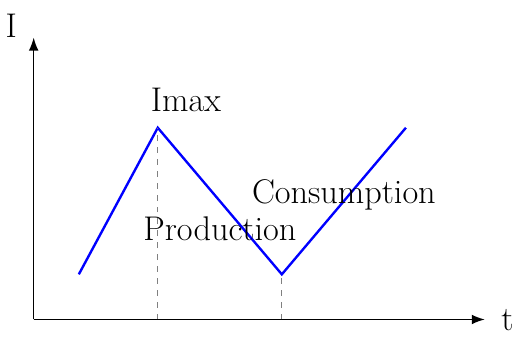
The Economic Production Quantity (EPQ) model determines the optimal production batch size when items are manufactured internally and replenishment occurs gradually during production rather than arriving instantaneously.
Unlike the Economic Order Quantity (EOQ) model, EPQ accounts for the fact that inventory is simultaneously being produced and consumed.
When to use it
Use this formula when:
- Products are manufactured in-house.
- Production rate exceeds demand rate.
- Inventory accumulates gradually during production.
- Setup costs and inventory holding costs are significant.
Example
A factory produces metal components with:
D = 50,000 units/year
S = 500 USD/run
H = 2 USD/unit/year
P = 120,000 units/year
Formula:
EPQ = √((2DS)/(H(1-D/P)))
Substitution:
EPQ = √((2×50,000×500)/(2×(1-(50,000/120,000))))
EPQ = √(42,857,143)
EPQ ≈ 6,547 units
Result:
Optimal production lot size ≈ 6,547 units
Applications
- Manufacturing planning
- Production scheduling
- Inventory optimization
- Lean manufacturing analysis
- Factory capacity planning
Note
EPQ is an idealized inventory model that assumes constant demand and production rates. Real manufacturing systems may experience downtime, variable demand, scrap rates, or capacity constraints that require more advanced planning methods.