
Variables
Description
What is this formula?
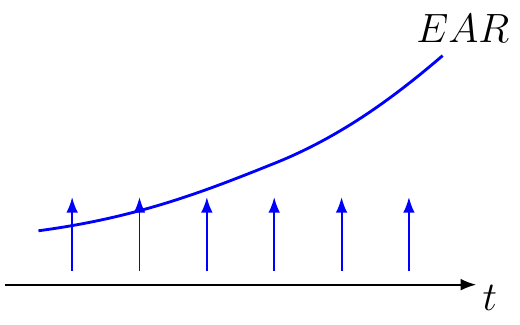
The Effective Annual Rate (EAR) calculates the true annual interest rate earned or paid after accounting for compounding during the year.
Unlike a nominal interest rate, the EAR reflects the actual growth of money resulting from periodic compounding.
When to use it
Use this formula when comparing loans, investments, savings accounts, bonds, or financial products that compound interest multiple times per year.
Example
Suppose:
Nominal Annual Rate = 12% = 0.12
Compounding Frequency = 12 times per year
Formula:
EAR=(1+r/m)^m−1
Substitution:
EAR=(1+0.12/12)^12−1
EAR=(1.01)^12−1
EAR=0.126825
Result:
Effective Annual Rate = 12.68%
Applications
Loan comparison
Investment analysis
Savings accounts
Banking products
Financial planning
Corporate finance
Note
The Effective Annual Rate assumes a constant nominal rate and a fixed compounding frequency. Real financial products may include fees, taxes, changing rates, or special conditions that cause the actual return to differ from the calculated EAR.