
Variables
Description
What is this formula?
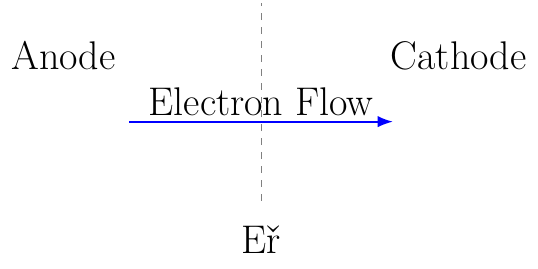
The standard cell potential is the voltage produced by an electrochemical cell under standard conditions.
It is calculated as the difference between the standard reduction potential of the cathode and the standard reduction potential of the anode.
When to use it
Use this formula when evaluating galvanic cells, predicting reaction spontaneity, comparing electrochemical systems, and designing batteries.
Example
Given:
E°cathode = +0.80 V
E°anode = -0.34 V
Formula:
E° = E°cathode − E°anode
Substitution:
E° = 0.80 − (-0.34)
Result:
E° = 1.14 V
The electrochemical cell has a standard potential of 1.14 volts.
Applications
Electrochemistry
Battery design
Corrosion analysis
Fuel cells
Electroplating
Chemical thermodynamics
Note
Standard conditions generally correspond to:
Temperature = 25°C (298.15 K)
Pressure = 1 bar
Solute activity = 1
All tabulated electrode potentials are standard reduction potentials. The anode potential is not reversed before substitution into the equation; the subtraction automatically accounts for the oxidation occurring at the anode.
A positive standard cell potential indicates a thermodynamically spontaneous galvanic cell under standard conditions.