
Variables
Description
What is this formula?
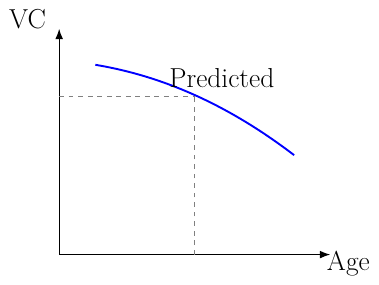
Predicted Vital Capacity estimates the maximum volume of air that can be exhaled after a full inspiration. The predicted value is calculated from demographic variables and is commonly used as a reference during pulmonary function testing.
When to use it
Use this formula when interpreting spirometry results, evaluating restrictive lung disease, assessing respiratory function, or comparing measured vital capacity against expected normal values.
Example
Data:
Male
Height = 175 cm
Age = 40 years
Formula:
VCmale = 0.052H − 0.022A − 3.60
Substitution:
VCmale = (0.052 × 175) − (0.022 × 40) − 3.60
VCmale = 9.10 − 0.88 − 3.60
VCmale = 4.62 L
Result:
Predicted Vital Capacity = 4.62 L
Applications
- Spirometry interpretation
- Pulmonary function laboratories
- Occupational medicine
- Respiratory disease screening
- Preoperative evaluation
Note
This is an empirical prediction equation derived from population studies. Numerous reference equations exist worldwide and may differ according to ethnicity, geographic region, age range, and the population used to derive the model. Modern pulmonary laboratories often use GLI (Global Lung Function Initiative) reference equations instead of older regional formulas.