
Variables
Description
What is this formula?
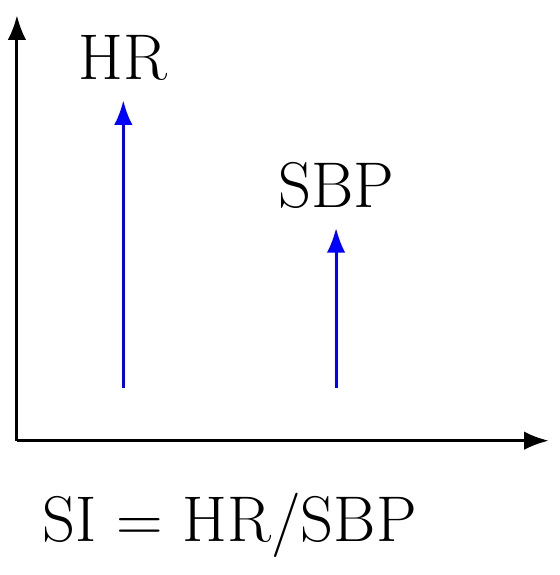
The Shock Index (SI) is a clinical parameter calculated as the ratio of heart rate to systolic blood pressure. It is used as a rapid indicator of hemodynamic stability and circulatory compromise.
When to use it
Use this formula when evaluating trauma patients, hemorrhage, shock, sepsis, dehydration, or any condition that may affect cardiovascular stability.
Example
Data:
HR = 90 beats/min
SBP = 120 mmHg
Formula:
SI = HR / SBP
Substitution:
SI = 90 / 120
Result:
SI = 0.75
The patient has a shock index of 0.75, which is generally considered within the normal range.
Applications
- Emergency medicine
- Trauma assessment
- Hemorrhage detection
- Critical care medicine
- Prehospital triage
Note
Shock Index is a clinical screening tool rather than a definitive diagnostic test. In healthy adults, values are typically between 0.5 and 0.7, while values approaching or exceeding 0.9 may indicate hemodynamic compromise. Interpretation should consider age, medications, underlying diseases, and the overall clinical picture.