
Variables
Description
What is this formula?
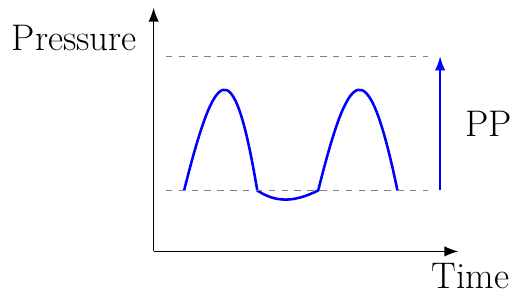
Pulse Pressure (PP) is the difference between systolic and diastolic blood pressure. It reflects the force generated by the heart with each contraction and provides information about arterial compliance.
When to use it
Use this formula when assessing cardiovascular health, arterial stiffness, stroke volume changes, or hemodynamic status.
Example
Data:
SBP = 120 mmHg
DBP = 80 mmHg
Formula:
PP = SBP − DBP
Substitution:
PP = 120 − 80
Result:
PP = 40 mmHg
The pulse pressure is 40 mmHg.
Applications
- Cardiovascular assessment
- Hypertension evaluation
- Arterial stiffness studies
- Critical care monitoring
- Hemodynamic analysis
Note
Pulse pressure is influenced by stroke volume, arterial compliance, and vascular resistance. Elevated pulse pressure may be associated with arterial stiffness and cardiovascular risk, particularly in older adults. Interpretation should always be made within the broader clinical context.