
Variables
Description
What is this formula?
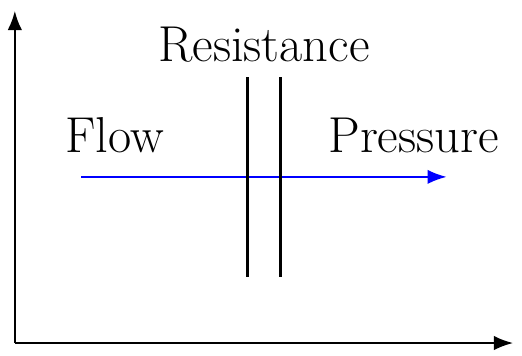
Pulmonary Vascular Resistance (PVR) quantifies the resistance encountered by blood as it flows through the pulmonary circulation. It is a key parameter used to evaluate pulmonary vascular disease and right ventricular afterload.
When to use it
Use this formula in pulmonary hypertension assessment, right heart catheterization, intensive care, and evaluation of right ventricular function.
Example
Data:
MPAP = 25 mmHg
PCWP = 10 mmHg
CO = 5.0 L/min
Formula:
PVR = ((MPAP − PCWP) × 80) / CO
Substitution:
PVR = ((25 − 10) × 80) / 5.0
Result:
PVR = 240 dyn·s/cm⁵
Applications
- Pulmonary hypertension diagnosis
- Right heart catheterization
- Assessment of right ventricular afterload
- Critical care monitoring
- Pulmonary vascular disease evaluation
Note
Pulmonary Vascular Resistance is a derived hemodynamic parameter based on simplified flow-resistance relationships. While widely used in clinical practice, it does not fully represent the complex and dynamic behavior of the pulmonary vascular bed. Results should be interpreted within the broader clinical context.