
Variables
Description
What is this formula?
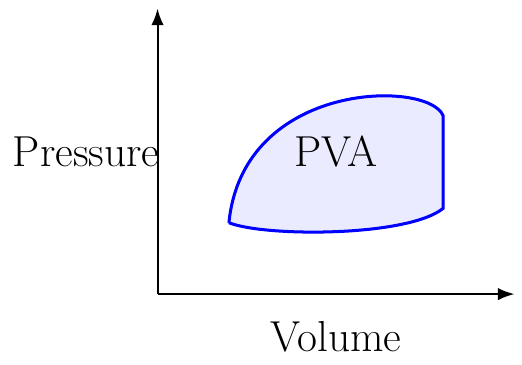
The Pressure–Volume Area (PVA) Estimate provides a simplified approximation of the mechanical energy generated by the ventricle during a cardiac cycle. PVA is closely related to myocardial oxygen consumption and ventricular workload.
When to use it
Use this formula for educational purposes, cardiovascular physiology studies, ventricular energetics analysis, and introductory hemodynamic modeling.
Example
Data:
ESP = 120 mmHg
SV = 70 mL
Formula:
PVA = ESP × SV / 2
Substitution:
PVA = 120 × 70 / 2
Result:
PVA = 4200 mmHg·mL
Applications
- Cardiac physiology education
- Ventricular energetics studies
- Myocardial oxygen demand analysis
- Hemodynamic modeling
- Cardiovascular research
Note
The true Pressure–Volume Area is obtained from complete ventricular pressure-volume loops and requires specialized measurements. This formula is a simplified estimate intended for educational and approximate clinical analysis. Results should not be interpreted as an exact measurement of ventricular mechanical energy.