
Variables
Description
What is this formula?
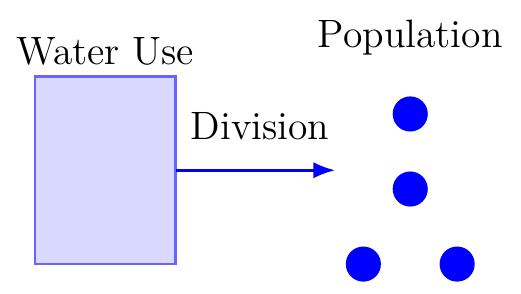
Per Capita Water Consumption (PWC) measures the average amount of water used by each person within a population over a specified period.
It is one of the most important indicators in water resource engineering, urban planning, public utilities, and sustainable development studies.
The metric is commonly expressed in liters per person per day and is widely used for the design and evaluation of water supply systems.
When to use it
Use this formula when evaluating:
- Municipal water supply systems
- Urban water demand
- Water conservation programs
- Utility performance
- Infrastructure planning
- Population growth studies
Example
A city consumes 36,000,000 liters of water per day and serves a population of 240,000 people.
Data:
W = 36,000,000 L/day
P = 240,000
Formula:
PWC = W / P
Substitution:
PWC = 36,000,000 / 240,000
Result:
PWC = 150 L/person/day
Each resident uses an average of approximately 150 liters of water per day.
Applications
- Water utility management
- Water demand forecasting
- Infrastructure design
- Sustainability assessments
- Government planning
- Resource conservation programs
Note
Per capita water consumption is an average indicator and may vary significantly among residential, commercial, industrial, and institutional users. Climate, economic development, water pricing, conservation policies, tourism, and cultural habits can strongly influence actual water use patterns.