
Variables
Description
What is this formula?
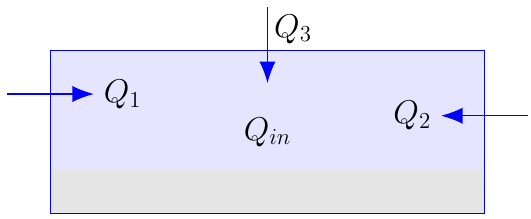
Mine Inflow Rate calculates the total quantity of water entering a mine from multiple sources.
Water can enter a mining operation through groundwater seepage, fractures, faults, aquifers, rainfall infiltration, surface runoff, or nearby water bodies.
The total inflow rate is obtained by summing all significant inflow sources.
When to use it
Use this formula when:
- Designing mine dewatering systems.
- Estimating pumping requirements.
- Evaluating flooding risks.
- Planning mine water management.
- Assessing groundwater control measures.
Example
An underground mine receives water from three major sources:
Q1 = 120 m³/h
Q2 = 85 m³/h
Q3 = 45 m³/h
Formula:
Qin = Q1 + Q2 + Q3
Substitution:
Qin = 120 + 85 + 45
Result:
Qin = 250 m³/h
The mine receives a total water inflow of 250 m³/h.
Applications
- Mine dewatering design
- Pump sizing
- Groundwater management
- Flood prevention
- Hydrogeological studies
- Water balance calculations
Note
This formula represents a simplified water balance approach. Real mine inflow rates often vary with season, rainfall, groundwater levels, blasting activities, excavation progress, geological structures, and aquifer behavior. Large mining projects typically use hydrogeological models to predict long-term inflow conditions.