
Variables
Description
What is this formula?
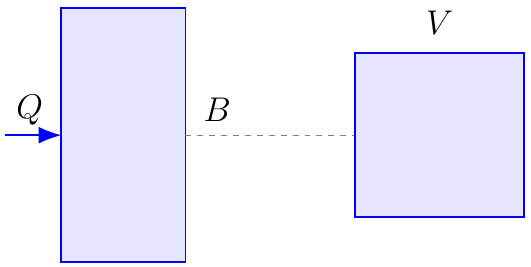
The Powder Factor is one of the most important blasting parameters in mining and quarry operations. It relates the mass of explosive used to the volume of rock broken by the blast.
A higher powder factor generally indicates greater explosive energy applied per unit volume of rock, while a lower value indicates less explosive consumption.
When to use it
Use this formula when:
- Designing production blasts.
- Comparing blast efficiency.
- Estimating explosive consumption.
- Optimizing drilling and blasting costs.
- Evaluating fragmentation performance.
Example
A surface mine uses 450 kg of explosive to blast a rock volume of 1800 m³.
Data:
Q = 450 kg
V = 1800 m³
Formula:
PF = Q / V
Substitution:
PF = 450 / 1800
Result:
PF = 0.25 kg/m³
The blast uses 0.25 kilograms of explosive for every cubic meter of rock broken.
Applications
- Open-pit mining
- Underground mining
- Quarry blasting
- Fragmentation optimization
- Explosive cost estimation
- Blast performance benchmarking
Note
Powder Factor is an operational performance indicator rather than a universal physical law. Optimal values depend on rock strength, geological conditions, explosive type, burden, spacing, hole diameter, and desired fragmentation. Different mines may use significantly different powder factors while achieving acceptable blasting results.