
Variables
Description
What is this formula?
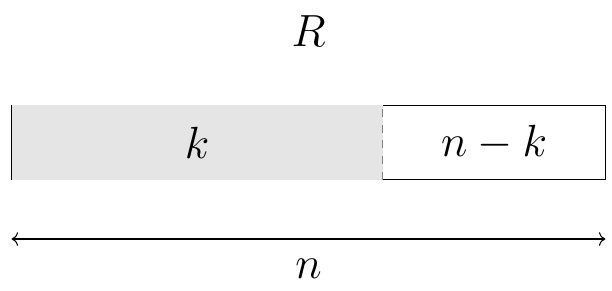
The Code Rate measures the fraction of transmitted bits that carry useful information.
It is one of the most important parameters in coding theory because it quantifies the tradeoff between transmission efficiency and error-protection capability.
Higher code rates provide greater efficiency but less redundancy, while lower code rates provide stronger error protection.
When to use it
Use this formula when analyzing:
- Error-correcting codes
- Hamming codes
- BCH codes
- Reed–Solomon codes
- LDPC codes
- Communication systems
Example
A codeword contains:
k = 120 information bits
n = 150 total bits
Formula:
R = k/n
Substitution:
R = 120/150
R = 0.80
Result:
R = 0.80
R = 80%
Applications
- Coding theory
- Telecommunications
- Digital communications
- Satellite communications
- Wireless networks
- Data storage systems
Note
Code rate represents the efficiency of a coding scheme. A code rate of 1 would indicate no redundancy, while lower values indicate that additional parity or redundancy bits have been added to improve error detection and correction performance.