
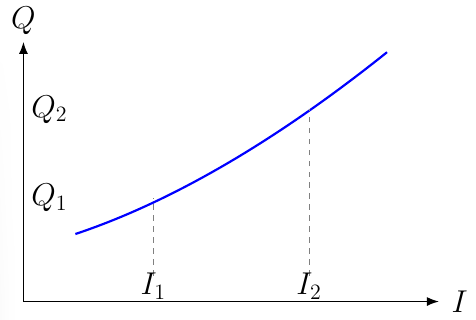
Variables
Description
What is this formula?
Income Elasticity of Demand measures how responsive the quantity demanded of a good is to changes in consumer income.
It quantifies the percentage change in quantity demanded resulting from a one percent change in income.
When to use it
Use this formula when classifying goods as normal, inferior, luxury, or necessity goods and when forecasting demand under changing economic conditions.
Example
Initial income:
I1 = 40,000 USD
Final income:
I2 = 44,000 USD
Initial quantity demanded:
Q1 = 100 units
Final quantity demanded:
Q2 = 115 units
Formula:
Ey = ((Q2−Q1)/Q1)/((I2−I1)/I1)
Substitution:
Ey = ((115−100)/100)/((44000−40000)/40000)
Ey = 0.15/0.10
Ey = 1.5
Result:
Demand is income elastic. A 1% increase in income generates approximately a 1.5% increase in quantity demanded.
Applications
- Demand forecasting
- Market segmentation
- Economic development studies
- Consumer behavior analysis
- Product strategy
Note
This formula uses percentage changes relative to initial values. Income elasticity can vary significantly across income levels and regions. Luxury goods typically have elasticity greater than 1, while necessities often have elasticity between 0 and 1.