
Variables
Description
What is this formula?
Cross-Price Elasticity of Demand measures how the demand for one good responds to changes in the price of another good.
It helps identify whether two goods are substitutes or complements.
When to use it
Use this formula when analyzing competitive products, complementary goods, consumer behavior, and market structure.
Example
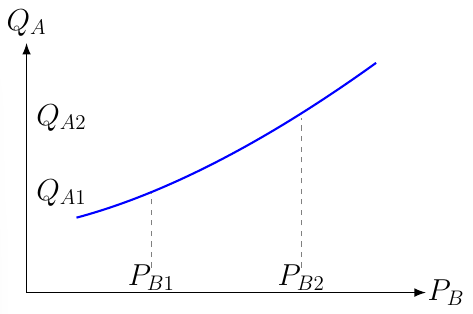
Price of coffee:
PB1 = 4 USD
PB2 = 5 USD
Demand for tea:
QA1 = 1000 units
QA2 = 1200 units
Formula:
Exy = ((QA2−QA1)/QA1)/((PB2−PB1)/PB1)
Substitution:
Exy = ((1200−1000)/1000)/((5−4)/4)
Exy = 0.20/0.25
Exy = 0.80
Result:
The positive elasticity indicates that tea and coffee are substitute goods.
Applications
- Market analysis
- Competitive strategy
- Product positioning
- Demand forecasting
- Consumer behavior studies
Note
A positive cross-price elasticity generally indicates substitute goods, while a negative value indicates complementary goods. The magnitude reflects the strength of the relationship between the products.