
Variables
Description
What is this formula?
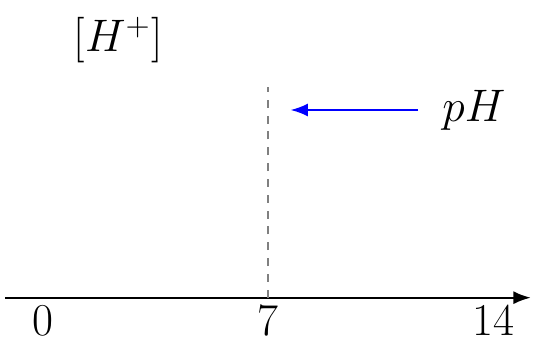
This formula calculates the hydrogen ion concentration from a known pH value. It is the inverse of the pH definition and is widely used in chemistry, biology, environmental science, and engineering.
When to use it
Use this formula when pH measurements are available and the actual hydrogen ion concentration is required for calculations, equilibrium analysis, reaction kinetics, or process control.
Example
A solution has:
pH = 4.50
Formula:
[H⁺] = 10^(-pH)
Substitution:
[H⁺] = 10^(-4.50)
Result:
[H⁺] = 3.16×10⁻⁵ mol/L
The hydrogen ion concentration is 3.16×10⁻⁵ mol/L.
Applications
- Acid-base equilibrium calculations
- Buffer solution design
- Environmental chemistry
- Water quality monitoring
- Biochemical systems
- Industrial process control
Note
Because the pH scale is logarithmic, small changes in pH can correspond to large changes in hydrogen ion concentration. A decrease of one pH unit corresponds to a tenfold increase in [H⁺].