
Variables
Description
What is this formula?
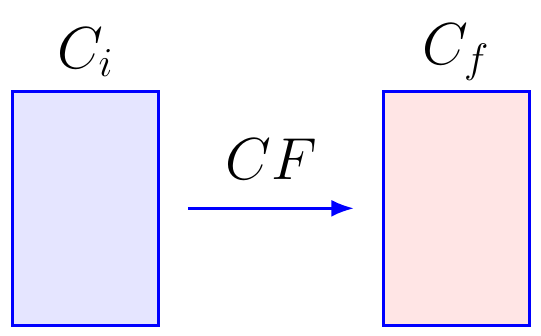
The concentration factor indicates how many times a solution has been concentrated relative to its initial concentration. It is commonly used in chemical processing, sample preparation, evaporation, membrane filtration, and analytical chemistry.
When to use it
Use this formula when determining the degree of concentration achieved after removing solvent, concentrating extracts, evaporating solutions, or processing samples for analysis.
Example
A water sample initially contains 2 mg/L of a contaminant. After concentration, the sample concentration becomes 50 mg/L.
Data:
Ci = 2 mg/L
Cf = 50 mg/L
Formula:
CF = Cf/Ci
Substitution:
CF = 50/2
Result:
CF = 25
The sample has been concentrated by a factor of 25.
Applications
- Sample preconcentration
- Environmental analysis
- Membrane filtration systems
- Evaporation processes
- Food processing
- Analytical chemistry
Note
The concentration factor describes the ratio between final and initial concentrations. It does not specify the physical method used to achieve concentration and assumes that the amount of analyte remains unchanged during the process.